Delta Sigma Theta
Founded 1913
Howard University
History
A public service sorority dedicated to bold action and social change, founded to develop leaders committed to advancing social justice.
Founded
1913
Institution
Howard University
Deep History
Founding and Early Vision
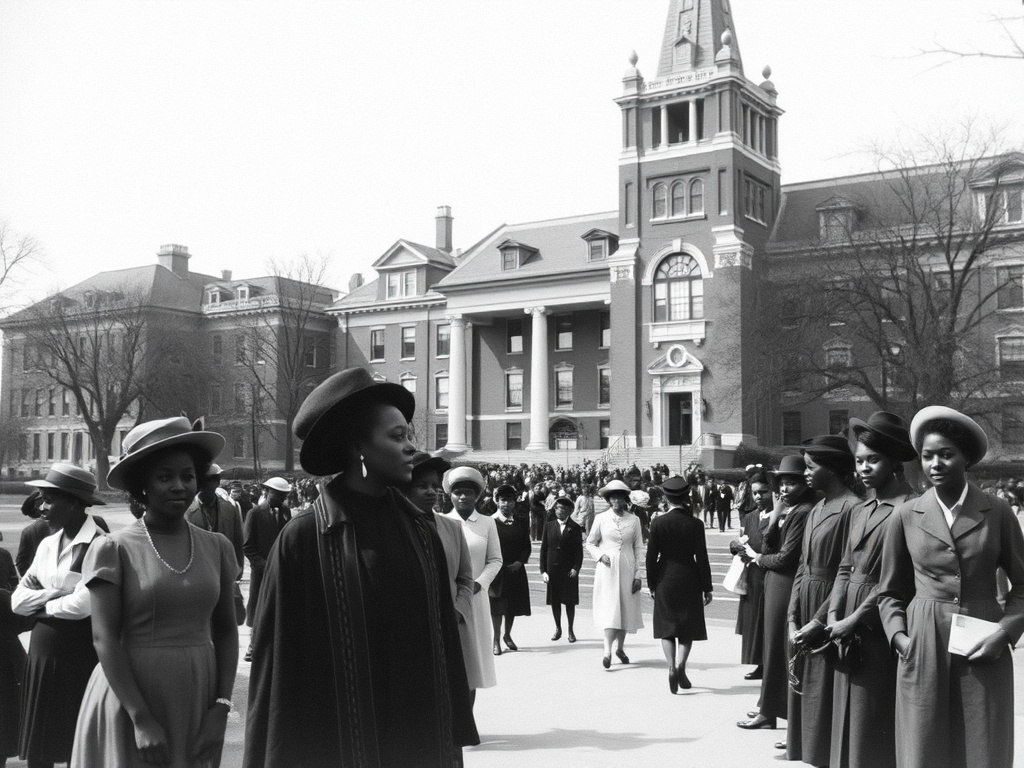
Delta Sigma Theta was established in 1913 with a distinct vision for what college brotherhood should represent. The founders sought to create a community built on principles that would distinguish their organization from others of the era. They envisioned a space where members would grow together, develop meaningful friendships, and commit to ideals that transcended the college years. Whether emphasizing cultural pride, academic achievement, leadership development, or social responsibility, the early members established foundational principles that continue to guide the organization. This founding vision reflected both the needs of their contemporary moment and timeless values of human dignity, excellence, and community commitment.
Growth and Expansion

Following its founding, Delta Sigma Theta grew from a single chapter to a national or multi-campus presence, expanding to universities where it could impact the lives of students seeking meaningful community. This expansion required developing systems and structures that allowed chapters to maintain local autonomy while adhering to shared values and principles. As the organization grew, it created networks of members across institutions, enabling lifelong friendships and professional connections that extended well beyond undergraduate years. The expansion phase demonstrated the appeal and relevance of the organization's mission, attracting chapters to diverse universities and attracting members from varied backgrounds. This growth solidified the organization's role as a significant force in the Greek experience at multiple institutions.
Mid-Century Development

Through the latter twentieth century, Delta Sigma Theta evolved in response to changing social conditions, member needs, and broader movements in American higher education and society. The organization adapted its practices while maintaining core commitments, navigating challenges and opportunities that reshaped the fraternity and sorority landscape. Members engaged with contemporary issues affecting their communities and society, translating the organization's principles into meaningful action. This period saw the development of more sophisticated leadership structures, community service initiatives, and educational programs designed to help members thrive personally and professionally. The organization's resilience and adaptability during this period demonstrated the enduring relevance of its founding vision even as specific practices and emphases evolved.
Modern Era and Legacy

In contemporary times, Delta Sigma Theta continues its mission while embracing new understanding of inclusion, diversity, and social responsibility. Current members honor the organization's traditions while pushing forward with updated perspectives on what brotherhood and sisterhood mean in the twenty-first century. The organization's legacy encompasses generations of members who have committed themselves to its ideals, achieved distinction in their professions and communities, and mentored younger members in turn. Modern chapters maintain connections with alumni networks that span decades, creating intergenerational communities committed to the organization's values. As Delta Sigma Theta looks toward the future, it carries forward the best of its traditions while remaining responsive to the evolving needs and aspirations of members and communities it serves.
Traditions
Core Values
Charity Partnerships
Frequently Asked Questions
What is historically significant about Delta Sigma Theta's founding?
Delta Sigma Theta was founded on January 13, 1913, at Howard University as public service sorority explicitly dedicated to social change. Its founding represented revolutionary moment when Black women organized themselves to address injustice and advance their communities during severe systemic racism.
What does Delta Sigma Theta's motto mean?
Delta Sigma Theta's motto—'Intelligence is the torch of wisdom'—expresses the organization's belief that education and intellectual development are essential foundations for effective social action. The motto reflects understanding that liberation requires both intellectual development and engagement with injustice.
Why was Delta Sigma Theta founded at Howard University?
Howard University, the premier historically Black university, provided ideal environment for founding public service sorority. The university's intellectual culture and Howard's role as center of Black intellectual life made it perfect setting for establishing sorority dedicated to developing Black women leaders.
How has Delta Sigma Theta contributed to civil rights?
Delta Sigma Theta members and chapters have been integral to civil rights movements, participating in demonstrations, voter registration campaigns, challenging segregation, advocating for educational equity, and engaging in sustained work for Black liberation. This activism reflects the sorority's founding commitment.
What is distinctive about Delta Sigma Theta's approach to public service?
Unlike fraternities that emphasize purely individual achievement or social events, Delta Sigma Theta approaches public service as fundamental to sisterhood and member development. Service is understood as organized collective action addressing systemic injustice.
How does Delta Sigma Theta define sisterhood?
Sisterhood at Delta Sigma Theta means bonds built through shared Black identity, intellectual development, commitment to social justice, and dedication to collective liberation. Sisters support each other while working together toward social transformation and community empowerment.
How selective is Delta Sigma Theta in membership?
Delta Sigma Theta maintains selective membership standards, seeking women demonstrating academic excellence, commitment to social action and justice, good character, and readiness to engage seriously with the sorority's mission of bold action for social change.
What role has Delta Sigma Theta played in Black higher education?
Delta Sigma Theta has been integral to Black higher education, supporting women's advancement, fostering intellectual community, developing leaders, creating networks enabling Black women's professional success, and maintaining consciousness of social justice responsibility among educated Black women.
What professional accomplishments have Delta Sigma Theta members achieved?
Delta Sigma Theta members have become civil rights leaders, educators, business executives, judges, government officials, artists, and change agents. Members credit the sorority with deepening their consciousness, strengthening their commitment to service, and providing networks supporting success.
How has Delta Sigma Theta adapted to contemporary issues?
Delta Sigma Theta continues addressing contemporary injustices affecting Black communities, including criminal justice reform, health disparities, educational equity, economic inequality, and representation in positions of power. The sorority believes Black women have responsibility to work toward justice.
How does Delta Sigma Theta support member development?
The organization provides mentorship addressing intellectual and professional development, creates opportunities for leadership development through chapter roles, facilitates networking with accomplished Black women, and supports members' engagement in social justice work.
What can prospective members expect from Delta Sigma Theta?
Prospective members should expect a sorority grounded in a century of social justice leadership, offering sisterhood with women committed to excellence and social change, providing access to accomplished Black women leaders, and expecting serious engagement with the sorority's mission of bold action for community liberation.
Share Your Thoughts
Have thoughts or comments about Delta Sigma Theta? We'd love to hear from you.