Alpha Phi Alpha
Founded 1906
Cornell University
History
Breaking Barriers: The First Fraternity

Alpha Phi Alpha holds a unique and profoundly significant place in American history as the first intercollegiate Greek-letter fraternity established specifically for African American men. Founded at Cornell University on December 4, 1906, during an era of severe racial segregation and systemic discrimination, Alpha Phi Alpha represented an act of intellectual courage and visionary leadership. At a time when African Americans were largely excluded from traditionally White fraternities, the founders created an organization dedicated to developing leaders who would advance their race and contribute to American society.
Founding Principles and Philosophy

From its inception, Alpha Phi Alpha was designed to cultivate not just friendship, but intellectual excellence, moral character, and social consciousness. The fraternity's founding principles of scholarship, fellowship, good character, and uplift of humanity represented a commitment that extended far beyond typical social fraternity activities. The fraternity's members understood that they bore responsibility not only to themselves but to their communities and race as a whole. These principles would guide the organization's mission for over a century.
"Lift While Climbing": Service and Uplift

At the heart of Alpha Phi Alpha's philosophy lies the concept of "lifting while climbing"—the idea that individual success must be accompanied by service to others and dedication to collective progress. This commitment means that as members achieve personal excellence and advancement, they bear responsibility to uplift their communities, mentor the next generation, and work toward the advancement of African American people. This principle has shaped Alpha Phi Alpha's approach to leadership development, community service, and social action throughout its history.
Intellectual Excellence and Moral Character

Alpha Phi Alpha's emphasis on scholarship and intellectual rigor has distinguished it throughout its history. The fraternity believes that personal development encompasses intellectual growth, academic achievement, and moral character development. Members are encouraged to pursue excellence in their chosen fields while maintaining the highest ethical standards. This commitment to both intellectual and moral development has produced leaders across every sector of society—from civil rights activism to academia, medicine, law, and business—all united by their dedication to using their talents for the betterment of their communities.
Founded
1906
Institution
Cornell University
Founding Members
Deep History
Founding and Establishment at Cornell

Alpha Phi Alpha holds a unique and profoundly significant place in American history as the first intercollegiate Greek-letter fraternity established specifically for African American men. Founded at Cornell University on December 4, 1906, during an era of severe racial segregation and systemic discrimination, Alpha Phi Alpha represented an act of intellectual courage and visionary leadership. At a time when African Americans were largely excluded from traditionally White fraternities, the founders—Henry Arthur Callis, Charles Henry Chapman, Eugene Kinckle Jones, George Biddle Kelley, and Nathaniel Allison Murray—created an organization dedicated to developing leaders who would advance their race and contribute to American society.
Founding Philosophy and Vision
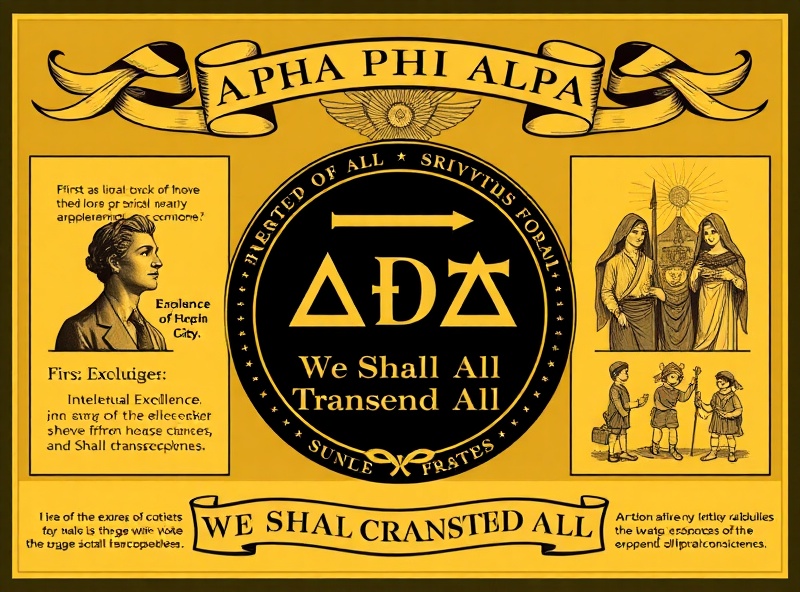
The fraternity's motto, "First of All, Servants of All, We Shall Transcend All," encapsulates a philosophy that extended beyond mere social club activities. From its inception, Alpha Phi Alpha was designed to cultivate not just friendship, but intellectual excellence, moral character, and social consciousness. The fraternity's members understood that they bore responsibility not only to themselves but to their communities and race as a whole.
Civil Rights Leadership and Activism

Throughout the twentieth century, Alpha Phi Alpha played a central role in the African American struggle for civil rights and social justice. Many of the organization's most illustrious members—including Dr. Martin Luther King Jr., who joined the fraternity while at Morehouse College—became architects of the Civil Rights Movement. Members like Thurgood Marshall brought legal brilliance to the fight against segregation, while countless others worked in education, business, and community development to uplift African American communities.
The First Principle and National Expansion

The fraternity's emphasis on "The First" principle—meaning that its members should strive for excellence in their chosen fields—has driven Alpha Phi Alpha to attract and develop some of the most accomplished African American leaders across generations. The organization has expanded from its singular foundation at Cornell to include chapters at historically Black colleges and universities, Ivy League institutions, and major universities across the nation.
Institutional Commitment to Service

Beyond individual achievement, Alpha Phi Alpha has maintained institutional commitment to social action and community service. The fraternity's nationwide involvement in educational programs, youth mentorship, and civil rights advocacy demonstrates that it has remained faithful to its founders' vision of lifting while climbing—that individual success must be accompanied by service to others and dedication to collective progress.
Traditions
Core Values
Notable Members
Charity Partnerships
Active Chapters

Frequently Asked Questions
What does Alpha Phi Alpha's name and motto mean?
The Greek letters ΑΦΑ stand for 'Alpha Phi Alpha.' The fraternity's motto—'First of All, Servants of All, We Shall Transcend All'—expresses the organization's core philosophy: members should strive to be first in academic and professional achievement, serve their communities selflessly, and ultimately transcend the limitations and barriers that society places upon them.
Why was Alpha Phi Alpha founded and what was its historical significance?
Alpha Phi Alpha was founded in 1906 at Cornell University as the first intercollegiate Greek-letter fraternity for African American men, during an era when African Americans were systematically excluded from White fraternities. Its founding represented an act of intellectual courage and vision, creating a community dedicated to developing leaders who would advance their race and contribute to American society during segregation.
How has Alpha Phi Alpha contributed to the Civil Rights Movement?
Many of Alpha Phi Alpha's most prominent members became leaders of the Civil Rights Movement, including Dr. Martin Luther King Jr. and Thurgood Marshall. Through its members' work in law, education, activism, and community development, the fraternity played a significant role in advancing civil rights and social justice during the twentieth century.
What does 'Lift While You Climb' mean in the Alpha Phi Alpha context?
'Lift While You Climb' expresses Alpha Phi Alpha's principle that individual success must be accompanied by service to others and dedication to collective progress. Members are expected to use their talents and opportunities not only for personal advancement but to help uplift their communities and contribute to the elevation of their race.
How does Alpha Phi Alpha maintain its commitment to social responsibility today?
Alpha Phi Alpha continues its legacy of social engagement through educational programs, mentorship initiatives, civil rights advocacy, and community development projects. The fraternity emphasizes that membership carries the responsibility to be agents of positive social change and to work toward creating more just and equitable communities.
Share Your Thoughts
Have thoughts or comments about Alpha Phi Alpha? We'd love to hear from you.